
In the ever-evolving landscape of healthcare, the utilization of advanced technology and data processing has emerged as a pivotal force reshaping the industry. From patient care management to drug development and operational efficiency, the latest strides in healthcare data processing have ushered in a new era of possibilities, promising enhanced outcomes and personalized care for individuals worldwide.
One of the most significant developments in healthcare data processing revolves around the integration of artificial intelligence (AI) and machine learning (ML) algorithms. These technologies have empowered healthcare systems to analyze vast amounts of data swiftly and accurately, enabling clinicians to make data-driven decisions in real-time. AI-driven algorithms assist in diagnosing diseases, predicting patient outcomes, and even recommending personalized treatment plans based on individual health data.
Interoperability remains a crucial focus in healthcare data processing. Efforts to standardize data formats and establish seamless communication between disparate systems are ongoing, aiming to facilitate the exchange of patient information among healthcare providers securely. Improved interoperability not only streamlines healthcare delivery but also supports research endeavors and enhances population health management.
However, as healthcare data processing continues to evolve, ethical considerations and regulatory compliance remain paramount. Striking a balance between innovation and safeguarding patient privacy is crucial to ensure trust in these technological advancements.
The future of healthcare is undeniably intertwined with the effective and responsible utilization of these groundbreaking data processing technologies, ushering in an era where data-driven insights lead to healthier lives and improved well-being for individuals worldwide.
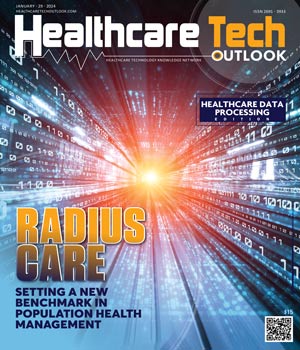
In this edition, we have featured Radius Care. The company is a health technology solution provider, and bridges this gap with its groundbreaking platform, Radius Insights. Harnessing machine learning, the platform analyzes vast patient datasets across the entire healthcare continuum and offers insights for identifying population risk patterns and personalized health plan engagement opportunities.